Stay up to date with the latest news
Subscribe to our telegram channel

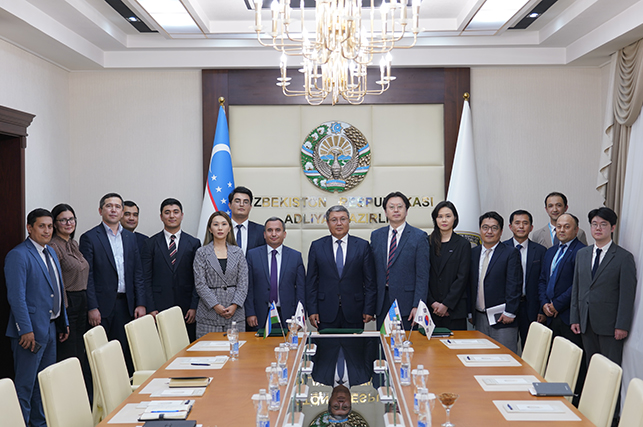
KOICA and Uzbekistan Launch AI Legal Services Project
Tashkent, Uzbekistan (UzDaily.com) — On 29 April 2026, the Korea International Cooperation Agency (KOICA) office, the Ministry of Justice of Uzbekistan, and Tashkent State University of Law signed a Memorandum of Discussion to launch a project aimed at developing legal services using artificial intelligence.
The initiative, titled “Creating an Environment for AI-Based Legal Services and Capacity Building in Uzbekistan,” was signed with the participation of Minister of Justice Akbar Tashkulov, KOICA Uzbekistan Director Shin Myung Sup, and Rector of the Tashkent State University of Law Bakhshillo Khodjaev, along with representatives of the involved institutions.
The project is scheduled for 2026–2030 and has a total budget of US$14.5 million. Its main objective is to support the digital transformation of the legal system, improve the quality and accessibility of legal services, and enhance professional competencies in the field of digital law.
The initiative is expected to develop and implement advanced AI-based solutions capable of integrating legal databases, court practice, and academic resources. These systems will enable new public services, including automated legal consultations, document drafting support, and analytical tools.
The Minister of Justice stated that the launch of the project marks the beginning of long-term cooperation aimed at modernizing the legal sector and making it more responsive to citizens’ needs. KOICA representatives emphasized that the initiative reflects the shared commitment of both countries to introducing digital solutions in public administration.
The Rector of Tashkent State University of Law noted that the project will play an important role in advancing legal education by training specialists with modern digital skills and an understanding of the ethical aspects of technology use.
The implementation of the project highlights the continued strengthening of partnership between Uzbekistan and the Republic of Korea in justice, education, and digital transformation.