Stay up to date with the latest news
Subscribe to our telegram channel

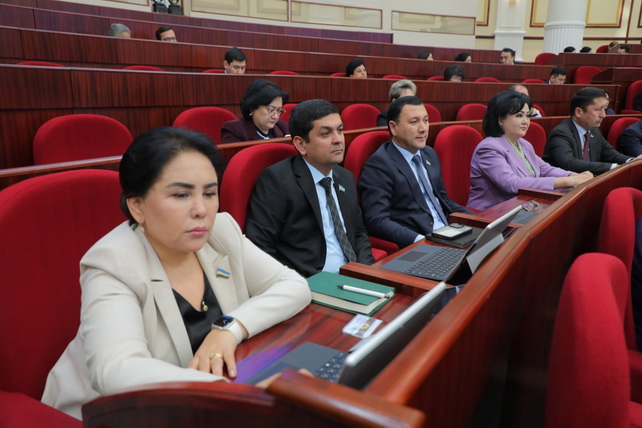
Uzbekistan Parliament Flags Poverty Fund Spending Failures
Tashkent, Uzbekistan (UzDaily.com) — Uzbekistan's parliament has exposed a stark gap between poverty-reduction budgets and actual disbursements, revealing that barely one in six planned female subsidy recipients received any support at all in 2025.
At a June 3 plenary session of the Legislative Chamber of the Oliy Majlis reviewing the 2025 state budget, lawmakers zeroed in on the effectiveness of funds allocated to poverty reduction and employment support.
People's Democratic Party deputy Sayyara Imamova delivered the sharpest critique, stating that despite significant budget allocations, the Ministry of Employment and Poverty Reduction and its subordinate agencies had committed "serious shortcomings." Of 485.6 billion soums allocated to the State Targeted Poverty Reduction Fund, only 63.9% was actually utilized. Imamova also flagged low execution rates across employment and subsidy programs, including substantial underspending on unemployment benefits and material assistance.
The figures on women's support were particularly stark: of 40,000 planned subsidy recipients, only around 7,000 — roughly 17.5% — actually received assistance.
Ministry Response: Reform in Progress
Deputy Minister of Employment and Poverty Reduction Alisher Muratov acknowledged the shortfalls but framed them as transitional. He explained that three previously separate funds had been consolidated into a single State Targeted Poverty Reduction Fund, and that distribution processes are being progressively digitized. A range of support instruments — subsidies, loans, and grants — have been introduced into the system, and some funds went unspent due to changes in assistance mechanisms and a shift toward more controlled digital procedures.
Notably, certain subsidies were discontinued altogether as ineffective instruments, being replaced by interest-free loans designed to support entrepreneurial activity among low-income citizens.
Vice Premier and Minister of Economy and Finance Jamshid Kuchkarov told the chamber that measures are being taken in 2026 to address the identified shortcomings and improve the effectiveness of social programs. Speaker of the Legislative Chamber Nuriddin Ismoilov stressed the need for critical analysis of the situation and the prevention of similar failures in the future.
The session concluded with a reminder that 17.5 trillion soums were directed toward financing social benefits and material assistance across 2025 — a figure that makes the execution gaps all the more pointed.