Stay up to date with the latest news
Subscribe to our telegram channel

Legal Migration and Human Rights in Uzbekistan Focus
Tashkent, Uzbekistan (UzDaily.com) — In the context of globalization, international migration is becoming one of the key drivers of socio-economic development for states. At the same time, issues related to the protection of migrant workers’ rights, the establishment of safe and legal employment channels, and the strengthening of international cooperation in the field of migration are becoming increasingly important.
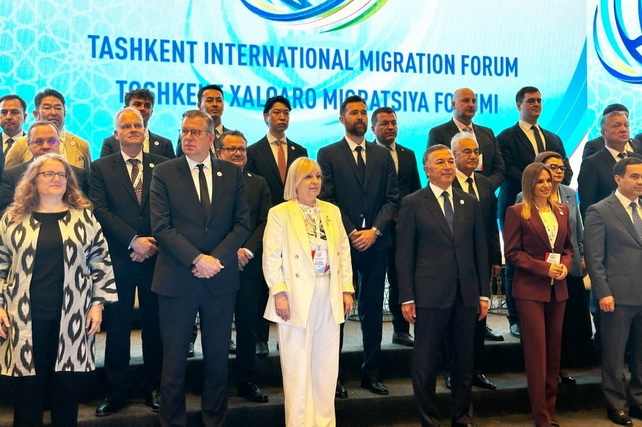
These issues were the focus of the First Tashkent International Migration Forum on “Socio-Legal Protection of Labor Migrants and Their Family Members,” held on May 18–19 in the capital of Uzbekistan. The forum was organized by the Agency for External Labor Migration under the Cabinet of Ministers of the Republic of Uzbekistan together with the International Organization for Migration (IOM).
The event brought together around 600 participants from more than 40 countries and became one of the largest international platforms in the region for discussing contemporary migration processes, legal protection of migrants, and the development of mechanisms for safe, orderly, and regular migration.
Speaking at the forum, Akmal Saidov, Director of the National Human Rights Centre of the Republic of Uzbekistan and academician, emphasized that legal migration significantly reduces risks of exploitation and human rights violations, strengthens social and legal protection for migrant workers, and serves the interests of both states and employers.
According to him, migration in Uzbekistan is now closely linked to sustainable development goals, poverty reduction, and the strengthening of social justice. In recent years, the country has developed a comprehensive system of support for citizens at all stages of the migration process—from preparation for employment abroad to legal and social protection.
Special attention is being given to the development of safe and legal labor migration channels. As noted during the forum, legal employment helps minimize risks of illegal labor, exploitation, and discrimination, while ensuring a higher level of protection for citizens’ rights.
The relevance of this topic is also confirmed by global trends. According to the International Organization for Migration (IOM), there are currently about 304 million international migrants worldwide, of whom approximately 168 million are labor migrants. They play a vital role in the global economy, supporting entire sectors and contributing to the development of international labor markets.
For Uzbekistan, the migration agenda is of particular importance given the country’s demographic structure. With a population exceeding 38 million, the republic is the most populous country in Central Asia and has one of the youngest demographic profiles in the region.
According to official data, about 1.2 million citizens of Uzbekistan are currently working abroad in an official capacity. Remittances from migrant workers remain an important factor supporting the national economy and the well-being of many families.
The forum emphasized that ongoing reforms in Uzbekistan’s migration system are gaining international recognition. In particular, the country is viewed as actively promoting modern approaches to migration management in line with the objectives of the Global Compact for Safe, Orderly and Regular Migration.
International experts participating in the forum highly evaluated Uzbekistan’s efforts to improve labor migration systems, expand legal protection mechanisms, and strengthen international cooperation.
Experts note that in modern conditions, migration policy is increasingly becoming part of states’ sustainable development strategies. Effective regulation of labor migration not only protects citizens’ rights but also helps reduce poverty, increase employment, and strengthen economic ties between countries.
In this context, the Tashkent International Migration Forum has become an important international platform for exchanging experience, discussing new approaches to migration governance, and developing joint solutions in the field of migrant workers’ rights protection.